
All Content Copyright emyvale.net
History:
The McKenna Story:
Emyvale is over 3000 years old - a Bronze Age tomb was discovered here in 1959. Unfortunately, the urn and other artefacts found were
inadvertently destroyed.
The first known inhabitants of Emyvale were of the Ui Meith tribe, hence the name of Emy. However in the 8th century
the McKenna Clan arrived and by the 12th century they had established an independent little ‘tuath’ or kingdom in North
Monaghan, which would last for the next 500 years.
Legend tells us that McKenna came from Meath on a hunting expedition as he followed a stag for two days and two
nights and eventually killed the prey at Liskenna in the Barony of Truagh. He fell in love with the daughter of Treanor
and settled here.
The McKenna Logo, which is also the McKenna Coat of Arms, shows the Hunter on horseback; his two faithful Hounds; a
Stag; Two crescent moons - indicating the two days and nights that McKenna pursued the huge deer.
The McKenna Headquarters was at Tully Fort and Crannog, 1Km east of Emyvale, on the road to Glaslough, and these
fortifications remained in position until they were completely destroyed in three successive English invasions - in 1602
(following the defeat at Kinsale), in 1642 and in 1643. Their final defeat came at the Battle of Drumbanagher (near
Glaslough) in March 1688.
The McKenna Cross stands in the Old Donagh Graveyard, 3.5Km from Emyvale and 1Km from Glaslough. It dates from the 12th century and
is almost 7ft. In height. According to local tradition it was in the shadow of this Cross that the McKenna chieftains
were inaugurated as Leaders of their Clann. It was obviously deliberately knocked down by ‘the Planters’ of the early
17th century and lay buried in the ground until discovered by a member of the Leslie family c.1830. It was knocked
or blown down again at a later date and again lay buried until 1910, when it was re-discovered by Sir Shane Leslie,
who had it erected in its present location. The stem appears short but actually stands 6ft. 2ins. In height. A concrete
collar of 18ins. Surrounds the lower part of the stem, keeping the two broken parts together. In the 13th century the
McKennas had become very strong and controlled vast tracts of land in North Monaghan. They ousted McMahon and
yet they helped each other when attacked. During the following 400 years or so they were very powerful and fought
many battles, helping O’Neill and Maguire, who returned the favour when needed. They had HQ in many places
around Emyvale and their main concentration was on Tully Hill where the remains of their fort can be seen. They
also had forts on surrounding Hills as well. In 1604 and again in 1641 and 1643 Tully was attacked and destroyed.
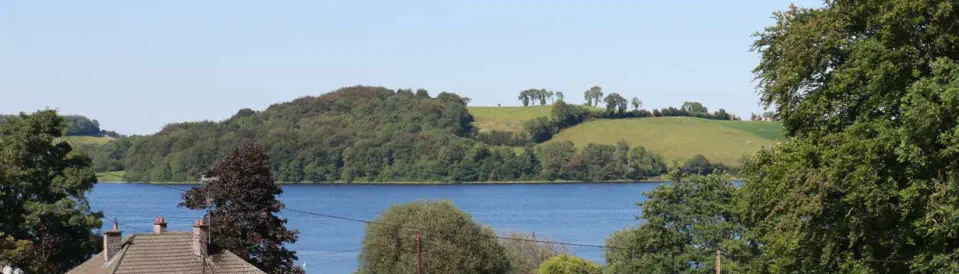
McKenna moved to Minmurray lake. In 1688 McKenna led the Jacobite support to Drumbanagher where Anketal
attacked them and won the Battle. Anketal was killed in the final attack but Major John McKenna was captured and
executed. It is said that prior to going into the war McKenna tossed his huge fortune into Minmuray Lake and it has
never been found.


PEI Connection .. HERE




This photo of McKennas and McKenna connections who met up
on 11th Jan 2023 in Hillgrove Hotel has been forwarded to us
by Nora Ryan. From left: Amy, Vincent McKenna, Marilyn,
Jerry, Annette McKenna née Treanor, Katie, Norah Ryan née
McKenna and Siobhan McQuillan née McKenna. Amy and Katie
are the daughters of Jerry and Marilyn McKenna from
Miramichi, New Brunswick, Canada. Jerry formerly lived in
Prince Edward Island.
We are about 3-4 cousins through DNA with them but as yet
have not established the connection. Following lunch in the
Hillgrove Jerry, Marilyn, Amy and Katie were visiting Old
Donagh Graveyard, then Tydavnet and Ubleshanney
graveyards. They will visit Dublin and hope to take in some
Irish music in the Cobblestones!
We wish them a most enjoyable holiday and maybe we can
return the visit sometime!

A photo of recent meeting with Danny & Dave
O'Callaghan Bournemouth, cousins of the Hollands,
McKernans and McKenna's(Ballagh & Pheadars). Martin
& Cindy McKenna Australia with daughters Sabine and
Leni. Also in the picture Caitríona McKenna (aunt of
Martin) with cousins Noreen Burke and Norah Ryan.














The McKenna Story:
Emyvale is over 3000 years old - a Bronze Age tomb was discovered
here in 1959. Unfortunately, the urn and other artefacts found were
inadvertently destroyed.
The first known inhabitants of Emyvale were
of the Ui Meith tribe, hence the name of Emy.
However in the 8th century the McKenna Clan
arrived and by the 12th century they had
established an independent little ‘tuath’ or
kingdom in North Monaghan, which would
last for the next 500 years.
Legend tells us that McKenna came from
Meath on a hunting expedition as he followed
a stag for two days and two nights and
eventually killed the prey at Liskenna in the
Barony of Truagh. He fell in love with the
daughter of Treanor and settled here.
The McKenna Logo, which is also the
McKenna Coat of Arms, shows the Hunter on
horseback; his two faithful Hounds; a Stag; Two crescent moons -
indicating the two days and nights that McKenna pursued the huge
deer.
The McKenna Headquarters was at Tully Fort and Crannog, 1Km east
of Emyvale, on the road to Glaslough, and these fortifications
remained in position until they were completely destroyed in three
successive English invasions - in 1602 (following the defeat at
Kinsale), in 1642 and in 1643. Their final defeat came at the Battle of
Drumbanagher (near Glaslough) in March 1688.
The McKenna Cross stands in the Old Donagh Graveyard, 3.5Km
from Emyvale and 1Km from Glaslough. It dates from the 12th
century and is almost 7ft. In height. According to local tradition it
was in the shadow of this Cross that the
McKenna chieftains were inaugurated as
Leaders of their Clann. It was obviously
deliberately knocked down by ‘the Planters’ of
the early 17th century and lay buried in the
ground until discovered by a member of the
Leslie family c.1830. It was knocked or blown
down again at a later date and again lay
buried until 1910, when it was re-discovered
by Sir Shane Leslie, who had it erected in its
present location. The stem appears short but
actually stands 6ft. 2ins. In height. A
concrete collar of 18ins. Surrounds the lower
part of the stem, keeping the two broken
parts together. In the 13th century the
McKennas had become very strong and controlled vast tracts of land
in North Monaghan. They ousted McMahon and yet they helped each
other when attacked. During the following 400 years or so they were
very powerful and fought many battles, helping O’Neill and Maguire,
who returned the favour when needed. They had HQ in many places
around Emyvale and their main concentration was on Tully Hill where
the remains of their fort can be seen. They also had forts on
surrounding Hills as well. In 1604 and again in 1641 and 1643 Tully
was attacked and destroyed. McKenna moved to Minmurray lake. In
1688 McKenna led the Jacobite support to Drumbanagher where
Anketal attacked them and won the Battle. Anketal was killed in the
final attack but Major John McKenna was captured and executed. It is
said that prior to going into the war McKenna tossed his huge fortune
into Minmuray Lake and it has never been found.
History:


All Content Copyright emyvale.net


This photo of McKennas and McKenna connections who met up
on 11th Jan 2023 in Hillgrove Hotel has been forwarded to us by
Nora Ryan. From left: Amy, Vincent McKenna, Marilyn, Jerry,
Annette McKenna née Treanor, Katie, Norah Ryan née McKenna
and Siobhan McQuillan née McKenna. Amy and Katie are the
daughters of Jerry and Marilyn McKenna from Miramichi, New
Brunswick, Canada. Jerry formerly lived in Prince Edward Island.
We are about 3-4 cousins through DNA with them but as yet
have not established the connection. Following lunch in the
Hillgrove Jerry, Marilyn, Amy and Katie were visiting Old Donagh
Graveyard, then Tydavnet and Ubleshanney graveyards. They
will visit Dublin and hope to take in some Irish music in the
Cobblestones!
We wish them a most enjoyable holiday and maybe we can
return the visit sometime!


